Some pottery is admired. Watt is remembered. Not because it was rare in its own time—Watt was made to be used— but because it lived in real kitchens, survived hard years, and carried the quiet signature of human hands. This is the long story: the clay, the town, the factory, the decorators, and the fires that shaped what collectors can still find.
When Clay Meant Survival
Long before collectors searched for Open Apple creamers or Rio Rose pitchers, the Watt name was tied to something far simpler: survival through clay. In the late 1800s, southeastern Ohio was fertile ground for pottery—rich clay deposits, nearby coal for firing, and rail access that could carry heavy wares beyond the local hills.
In 1889, the Brilliant Stoneware Company was established on what was known as Rose Farm near Crooksville, Ohio. The early output wasn’t decorative. It was necessity: salt-glazed crocks, storage jars, jugs, and utilitarian forms meant to withstand farm kitchens and general stores. These pieces were tools—thick-walled vessels built to last through winter storage and daily handling.
But inside those early kilns, something more important than decoration was taking shape: experience. Clay bodies were tested. Firing cycles refined. Production scaled. Breakage taught lessons. Overfiring taught restraint. Underfiring taught patience. Pottery is a teacher, and the early years taught Watt how to keep going.
In 1897, fire destroyed the plant. For many small potteries, that would have been the end. The Watt operation rebuilt. That instinct—rebuild instead of retreat—became part of the company’s identity.
Brilliant Stoneware begins near Crooksville—utilitarian wares, industrial ambition, and hard-use forms.
A major fire destroys the plant. The operation rebuilds—setting a pattern of resilience that returns later.
A Pottery Town and a Family Name
Crooksville was not a town that happened to have a pottery. It was a pottery town. Kilns dotted the hillsides. Families worked in clay generation after generation. Talent moved between companies. Investors held interests across operations. Competition was real—but so was the network. When collectors notice “Ohio pottery similarities,” they’re seeing geography at work.
As the early 1900s unfolded, ownership structures shifted, stock changed hands, and leadership evolved. W.J. Watt’s influence strengthened, and the Watt name became firmly attached to production in the region. Later, Marion Watt carried leadership responsibilities forward, steering the company through changing decades.
In 1923, the factory faced a test that wasn’t weather or fire—it was human tension. A labor dispute led to a strike that temporarily shut down operations. Negotiations followed. Agreements were reached. Production resumed. That event matters because it reveals Watt as a working factory inside the realities of American manufacturing—not a fragile boutique operation.
From Stoneware to the Modern Kitchen
By the 1930s, American kitchens were changing. Refrigeration became common. Electric ranges entered homes. Consumer expectations shifted from pure durability to functional versatility. Watt adapted rather than resisted. The familiar cream-colored clay body collectors recognize today became standard—strong, dependable, and visually suited to later decoration.
The forms expanded: mixing bowls, pitchers, casseroles, and oven-safe wares designed for everyday use. Many accounts describe temperature-transition testing—moving pieces from hot ovens to cooler environments—to ensure durability. Whether formalized or simply proven through use, toughness became part of the Watt promise.
The Great Depression tested every manufacturer. Many potteries failed in the 1930s. Watt survived in part because it produced necessities. World War II reshaped labor and materials, but production continued. When the post-war boom arrived, Watt was positioned—experienced, equipped, and ready to scale.
Depression years reward practical wares. Watt survives by making pieces families still needed.
War-era constraints give way to post-war demand—setting the stage for Watt’s peak decade.
Flood, Fire, and Forward Momentum
Watt’s story is marked by disruption—and the decision to rebuild. In 1949, floodwaters caused damage to the Crooksville plant. In 1951, another serious fire disrupted operations. Each time, the factory recovered. That pattern of resilience wasn’t new. It was already in the company’s bones.
By the 1950s, Watt was strong. Hundreds of workers moved clay through the building—mold makers, kiln tenders, decorators, packers, shipping crews. Annual output reached into the millions. Investments in equipment and infrastructure reflected confidence. In 1960, a new circular kiln modernized firing capacity and efficiency. This was not a company fading away. It was a manufacturer at full strength.
When Decoration Changed Everything
Post-war America wanted more than function. Kitchens brightened. Suburbs expanded. Entertaining increased. Color returned to domestic life. Watt didn’t abandon utility when it introduced decoration—it elevated it. A mixing bowl was still a mixing bowl, but now it was beautiful enough to leave on the counter.
Apple. Tulip. Starflower. Rio Rose. Cherry. Rooster. Teardrop. Silhouette. Morning Glory. Autumn Foliage. These patterns weren’t transfer prints. They were applied by hand.
Inside the factory, decorators sat at long tables—brush in hand, glaze nearby, piece after piece moving in steady rhythm. Names like Hazel McCray, Betty Ford, Glenna Gossman, and Jackie Sherrick matter to collectors because they represent what makes Watt personal: the human layer. No two apples are exactly the same because no two brush strokes are exactly the same.
That variation is not a flaw. It’s the signature of the line. Collectors line up bowls and compare—leaf angles, band placement, the thickness of the apple outline. It’s the same mold, but not the same hand.
How Watt Was Sold (and Why Some Pieces Are Scarce)
Watt pottery reached American homes through everyday retail channels and promotional programs. Premium campaigns encouraged repeat shopping— and practical forms, especially bowls, moved in huge quantities. This distribution model explains what collectors notice immediately: some molds are common because they were produced in high volume for everyday use and promotion.
Specialty molds are different. They required additional tooling, sometimes shorter production windows, and often faced higher breakage in real kitchens. Time has filtered the population. Survival bias shapes modern rarity.
In other words: scarcity isn’t always about what was “most loved” at the time—it’s often about what was made most, what was given away, and what survived decades of use.
October 4, 1965
The final fire came quickly. On October 4, 1965, a catastrophic blaze destroyed the Crooksville factory and warehouse. Unlike earlier setbacks, this time production did not resume at scale. Machinery was lost. Inventory was consumed. And critically—decades of corporate records disappeared.
That last detail is why historians and collectors encounter gaps today. Production logs, board minutes, internal correspondence— the paperwork that would have answered “when did this start?” or “how many molds existed?” simply burned. Modern uncertainty isn’t because Watt lacked history. It’s because history went up in smoke.
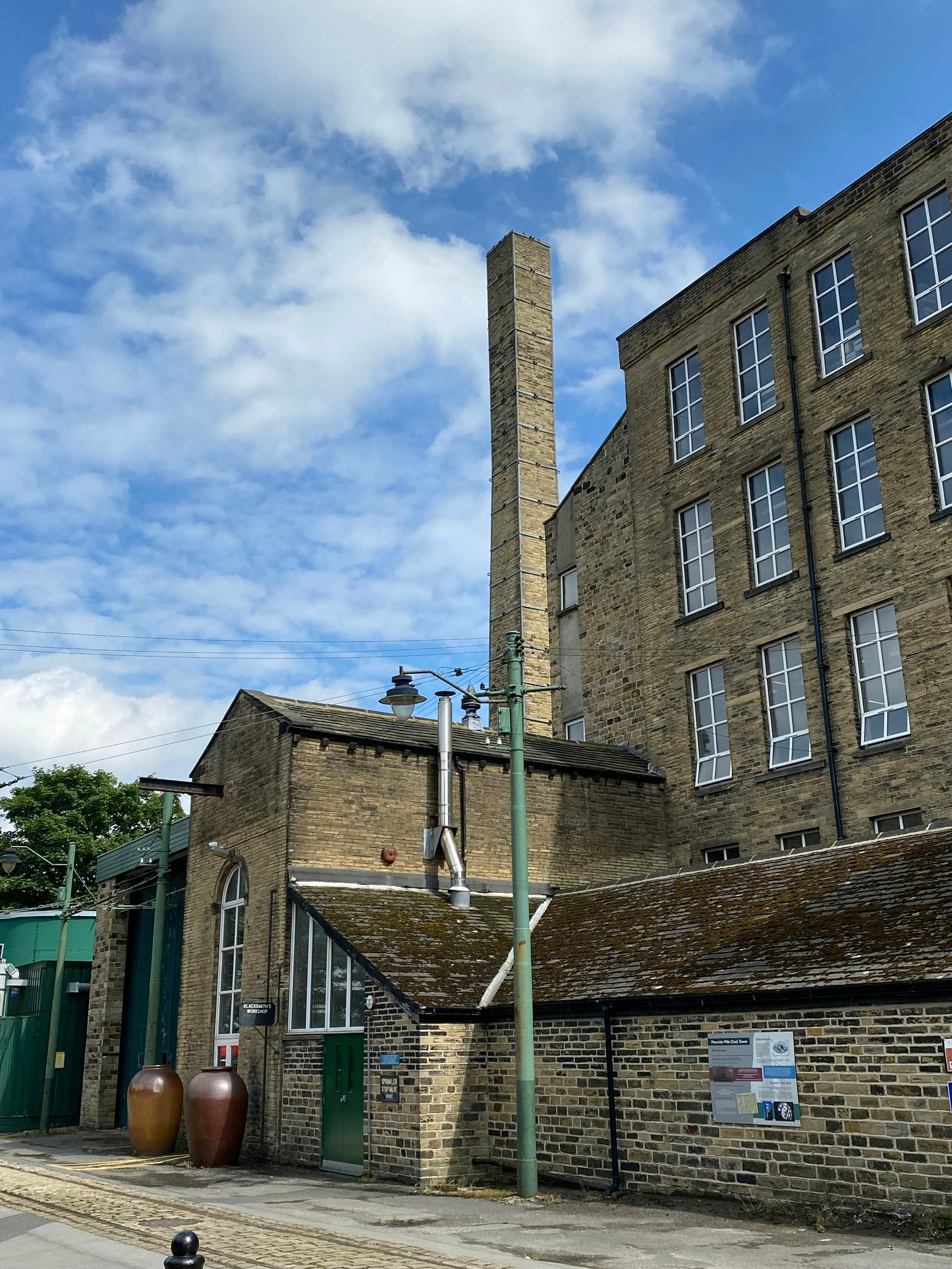
After the 1965 fire, the Crooksville factory site eventually changed ownership—marking the end of Watt’s production era.
Why Watt Still Matters
When collectors hold a Watt bowl today, they’re holding something finite. There will be no reissue. No modern reprint. No factory revival. The abrupt end froze Watt in time—and gave every surviving piece added meaning.
Many collectors start with what they remember: an Apple bowl in a mother’s kitchen, a pitcher on a counter, a wedding gift received in the 1950s. And then the collecting deepens—mold numbers, glaze differences, subtle brushwork. Over time, it becomes more than pottery. It becomes continuity.
If you’re exploring the most iconic decorated lines, start with Apple and Tulip —two patterns that show how Watt balanced repeatable production with human variation.
Explore Major Watt Pottery Patterns
These category pages show currently available pieces and help collectors browse by the patterns they love.
Every pattern reflects a different phase of Watt’s production and can vary by mold number, glaze strength, and decoration clarity.
Last updated for collectors • Built to help with identification, context, and smarter buying.